Digestive System
CELIAC DISEASE
By A.A. (staff writer) , published on December 04, 2020
Medicine Telehealth Health celiac disease treatment of celiac disease


Celiac disease is a disorder of the GI tract that affects the small intestine. It is an immune disease in which people cannot eat gluten because it will damage their small intestine. Eating foods containing gluten in celiac disease leads to a damaging of the small intestine by your immune system.
Gluten is a protein present in barley, wheat, and rye. It is also found in other products like toothpaste, lip balm, vitamins, supplements, hair, and skin products.
The symptoms of celiac disease are different in each person. Sometimes symptoms occur in the digestive system or in other body parts. Some people may experience depression, or some experience diarrhea and abdominal pain. Celiac disease can be genetic. It can be diagnosed with blood tests. The examination of a piece of small tissue from the small intestine can also help to diagnose this disease. A gluten-free diet is the most useful treatment1.
Symptoms of Celiac Disease
The symptoms of celiac disease are different from food allergy. Because both are different conditions. In case you are allergic to wheat, and eat something with wheat in it, then you may experience a hard time breathing, itchy or watery eyes.
Celiac disease symptoms in adults
When you unintentionally eat something with gluten in it, and you have celiac disease then you may experience the following symptoms.
- Anemia
- Abdominal pain
- Bloating or a feeling of fullness
- Joint or bone pain
- Heartburn
- Diarrhea
- Constipation
- Gas
- Dermatitis herpetiformis or itchy, blistery rashes
- Fatigue, malaise, or headache
- Nausea
- Mouth ulcers
- Nervous system problems such as numbness or tingling in hands or feet. Change in awareness and balance issues.
- Weight loss
- Smelly, and pale poop that floats (steatorrhea)2
Celiac disease symptoms in children
Children with celiac disease are irritable and feel tired. They may also have delayed puberty and may also be smaller than normal children of the same age. The other common symptoms in children include
- Bloating
- Abdominal pain
- Vomiting
- Weight loss
- Constipation or persistent diarrhea
- Fatty, pale, and foul-smelling stools3
Causes of celiac disease
The exact cause of the celiac disease is unknown. Eating foods with gluten and genetic factors contribute to celiac disease. Other common causes include gastrointestinal infections, gut bacteria, and infant-feeding practices.
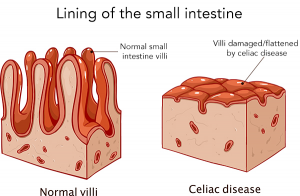
Sometimes celiac disease becomes active after childbirth, viral infection, surgery, pregnancy, or severe emotional stress. When you eat food containing gluten, the immune system of the body overreacts in response to gluten. It damages the hair-like, tiny projections (villi) that line the small intestine. The function of the villi is to absorb nutrients, vitamins, and minerals from the food you eat. Damage to villi leads to poor or no absorption of nutrients, no matter how much you eat.
Risk factors of celiac disease
Celiac disease occurs commonly in people who have:
- Type 1 diabetes
- Family history of celiac disease or dermatitis herpetiformis
- Turner syndrome or Down syndrome
- Autoimmune thyroid disease
- Lymphocytic, microscopic or collagenous colitis
- Addison's disease
Complications of Celiac disease
If celiac disease is not properly treated, it may cause the following complications.
Malnutrition
It happens when your small intestine cannot absorb sufficient nutrients. Malnutrition leads to weight loss and anemia. It is a serious health concern in children because it can cause short stature and slow growth.
Bone weakening
It is a serious health concern because it causes loss of bone density in adults (osteoporosis or osteopenia) and osteomalacia or rickets in children. It happens due to malabsorption of vitamin D and calcium.
Cancer
The risk of cancer, including small bowel cancer or intestinal lymphoma is higher in patients of celiac disease who don’t maintain a gluten-free diet.
Infertility and miscarriage
Reproductive issues are common due to the malabsorption of calcium and vitamin D.
Lactose intolerance
Due to damage to the small intestine, you may experience diarrhea and abdominal pain after eating or drinking dairy products containing lactose4.
Diagnosis of celiac disease
Doctors diagnose celiac disease by physical examination and medical history. The following are the common blood tests used for the diagnosis of celiac disease.
- Complete blood count (CBC)
- Cholesterol test
- Serum albumin test
- Liver function test
- Alkaline phosphate level test5
Treatment of Celiac Disease
A lifelong gluten-free diet is the only treatment for celiac disease. You have to avoid gluten in any form of food. It means to avoid all foods that contain gluten like barley, rye, and wheat. As it is an autoimmune disease, no surgical or medical treatment can cure celiac disease. Researchers are working day and night to find a possible cure and alternative therapies6.
There is a wide range of foods that contain gluten including hot dogs, soups, ice creams, and sauces. The patient of celiac disease must be very careful in choosing their diet plan. It is recommended that patients must consult a nutritionist and dietitian for dietary support. When a patient starts taking a gluten-free diet, the symptoms may resolve in 1 to 2 weeks.
Due to poor absorption of nutrients from the small intestine, the patients of celiac disease need supplements to fulfill their nutritional requirements. That’s why supplements including vitamins, minerals, and hematinics are given according to deficiencies in the patients. There is no need for supplements in mild cases, but severe cases may require calculated doses of ferrous sulfate, calcium supplements, folate, and standard multivitamins. Seriously ill children may also require total parenteral nutrition and bowel rest. The poor response towards a gluten-free diet shows that either diagnosis is incorrect or the disease has become refractory. The use of corticosteroids is helpful in controlling the symptoms of refractory disease7.
References
- Celiac Disease. [internet]. [cited 2020 October 09]; Available from https://medlineplus.gov/celiacdisease.html#:~:text=Celiac%20disease%20is%20an%20immune,wheat%2C%20rye%2C%20and%20barley.
- Celiac Disease. [internet]. [cited 2020 October 09]; Available from https://www.webmd.com/digestive-disorders/celiac-disease/celiac-disease#1
- Celiac Disease: More Than Gluten Intolerance. [internet]. [cited 2020 October 09]; Available from https://www.healthline.com/health/celiac-disease-sprue#symptoms
- Celiac Disease. [internet]. [cited 2020 October 09]; Available from https://www.mayoclinic.org/diseases-conditions/celiac-disease/symptoms-causes/syc-20352220
- Celiac Disease: More Than Gluten Intolerance. [internet]. [cited 2020 October 09]; Available from https://www.healthline.com/health/celiac-disease-sprue#symptoms
- Celiac Disease. [internet]. [cited 2020 October 09]; Available from https://www.beyondceliac.org/celiac-disease/
- Celiac Disease. [internet]. [cited 2020 October 09]; Available from https://www.msdmanuals.com/professional/gastrointestinal-disorders/malabsorption-syndromes/celiac-disease
Find articles related to: Medicine Telehealth Health celiac disease treatment of celiac disease
More articles about Digestive System
Back to the Health Tips Index