Mental Health
Obsessive-Compulsive Disorder
By A.S. (staff writer) , published on September 01, 2020
Medicine Telehealth Health OCD Anxiety Mental Health


Obsessive-compulsive disorder (OCD) is an anxiety disorder in which people have recurring, unwanted, and intrusive thoughts, ideas or sensations (obsessions) that make them feel driven to do something repetitively (compulsions). The repetitive behaviors, such as hand washing, checking on things, or cleaning, can significantly interfere with a person’s daily activities and social interactions. Also ideas, images, or impulses that enter the individual's mind again and again even though they may acknowledge them as excessive and irrational. Affected people cannot stop these thoughts and actions. These acts and ideas are distressing and the person tries to resist them. These symptoms can interfere with all aspects of life, such as work, school, and personal relationships.
A 2001 World Health Organization (WHO) mental health report estimated that OCD was among the top 20 causes of illness-related disability worldwide for people aged 15 to 44 years. About 1.2 percent of Americans have OCD and among adults, slightly more women than men are affected.
OCD Types
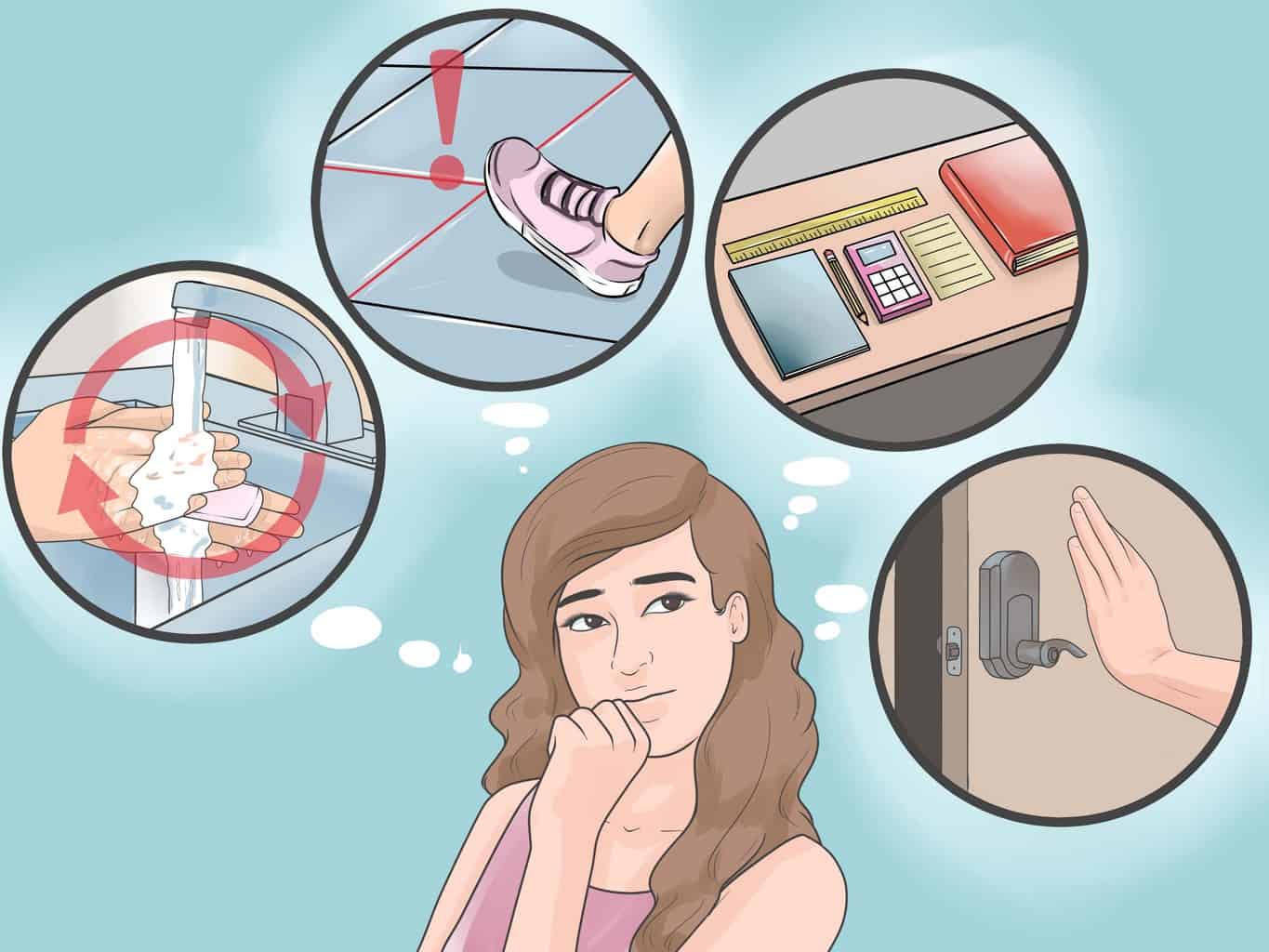
OCD comes in many forms, but most cases fall into at least one of four general categories:
-
Checkings, such as locks, alarm systems, ovens, or light switches, or think you have a medical condition like schizophrenia
-
Contamination, obsessions that involve fear of contamination (germs) with related compulsions of cleaning and washing. Fear of contamination typically involves excessive concern regarding the threat of illness or disease. This can lead to excessive tooth-brushing, showering, over-cleaning certain rooms in the house, such as the bathroom or kitchen, and avoiding large crowds for fear of contracting germs
-
Symmetry and order, the need to have things lined up in a certain way. They may adjust the books on their shelf repeatedly so that they are all straight and perfectly lined up
-
Ruminations and intrusive thoughts, an obsession with an extended and unfocused train of thoughts. The person may seem detached and deep in thought. However, ruminating never reaches a satisfactory conclusion.
Symptoms
People with OCD may have symptoms of obsessions, compulsions, or both. These symptoms can interfere with all aspects of life, such as work, school, and personal relationships. These thoughts or behaviors last more than an hour each day.
Obsession: are recurrent and persistent thoughts, impulses, or images that cause distressing emotions such as anxiety. Common symptoms include:
-
Fear of germs or contamination
-
Unwanted and intrusive thoughts
-
Aggressive thoughts towards others or self
-
Having things symmetrical or in a perfect order
Compulsions: are repetitive behaviors or mental acts that a person feels driven to perform in response to an obsession. Common compulsions include:
-
Excessive cleaning and/or hand-washing
-
Ordering and arranging things in a particular, precise way
-
Repeatedly checking on things, such as repeatedly checking to see if the door is locked or that the oven is off
-
Compulsive counting
Causes and Risk Factors
The exact causes of OCD are still unknown. Researchers believed that OCD is thought to have a neurobiological basis in which the brain does not function properly or due to the imbalance of neurotransmitters in the brain.
Risk factors that provoke OCD include:
-
Genetic causes, OCD runs in families
-
Depression, anxiety or tics
-
A history of physical or sexual abuse as a child
-
Trauma
-
Behavioral causes
-
Auto-immune causes, Some rapid-onset cases of OCD in children might be consequences of Group A streptococcal infections, which cause inflammation and dysfunction in the basal ganglia
Treatment
Cognitive-Behavioral Therapy
CBT is an effective method for treating OCD. CBT is also known as exposure and response prevention. During CBT sessions, patients are exposed to situations that create anxiety and provoke compulsive behavior or mental rituals. Patients get to engage and learn how to cope with these compulsive behaviors or mental rituals. This treatment helps people learn to resist the compulsion to perform these rituals.
Medication
A class of medication known as selective serotonin reuptake inhibitors (SSRIs) is highly effective in the treatment of OCD. SSRIs are generally used in higher doses for OCD than for depression. It might take up to 3 months for results to be noticed. SSRIs that may be prescribed to help people manage OCD include:
-
clomipramine
-
fluoxetine
-
fluvoxamine
-
paroxetine hydrochloride
-
sertraline
-
citalopram
-
escitalopram
Sometimes, atypical anti-psychotics are added if patients don’t respond to SSRIs.
Relaxation Techniques
Keeping a healthy lifestyle and being aware of warning signs and what to do if they return can help in coping with OCD and related disorders. Also, using basic relaxation techniques, such as meditation, yoga, visualization, and massage, can help ease the stress and anxiety caused by OCD
References
Obsessive-Compulsive Disorder. (n.d.). Retrieved from National Institute of Mental Health: https://www.nimh.nih.gov/health/topics/obsessive-compulsive-disorder-ocd/index.shtml
Obsessive-compulsive disorder: Overview. (2020, March). Retrieved from NCBI: https://www.ncbi.nlm.nih.gov/books/NBK279562/
Timothy J. Legg, P. C. (2018, January 18). What is an obsessive-compulsive disorder? Retrieved from Medical News Today: https://www.medicalnewstoday.com/articles/178508
What Is Obsessive-Compulsive Disorder? (n.d.). Retrieved from American Psychiatric Association: https://www.psychiatry.org/patients-families/ocd/what-is-obsessive-compulsive-disorder
Find articles related to: Medicine Telehealth Health OCD Anxiety Mental Health
More articles about Mental Health
Back to the Health Tips Index