Medical Practice & Business
Pharmaceutical Supply Chain and Circular Economy Healthcare
By A.S. (staff writer) , published on August 10, 2021
Medicine Telehealth Health Circular Economy Pharmaceutical Supply Chain


Pharmaceutical supply chain and circular economy
Effect on the environment due to manufacturing industrialization has increased the demand for renewable energy, water infrastructure, waste conservation, and greenhouse gas emission mitigation over the last 30 years. Different manufacturing industries are gradually accepting a transformation to achieve sustainable manufacturing by using a circular economy (Ang et al., 2021).
The pharmaceutical industry is characterized as a system of processes, operations, and organizations that are involved in drug discovery, development, and production. The pharmaceutical supply chain network (PSCN) is a method of distributing pharmaceutical products of appropriate quality at an appropriate time and location to final customers. As a result, it is known as a multinational industry with a major impact on human life. As a consequence, delays in manufacturing or distribution can endanger human lives by causing issues with drug availability. As a consequence, the use of optimization techniques in the PSCN domain has piqued the interest of scientists and researchers (Goodarzian et al., 2020).
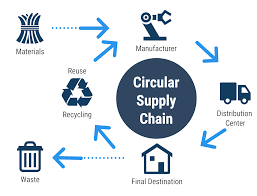
A growing global financial and phenomenal burden is pharmaceutical wasted medicines. The circular economy in the pharmaceutical supply chain as a philosophy aims at promoting waste reduction, optimizing the value of medicines, and enabling sustainable development in this supply chain (increasing circularity). The circular economy (CE) can be defined as an economic framework that emphasizes the closed-loop system (Rezaei and Liou, 2020), that involves the residual value of components and resources used to the fullest extent possible (Jain et al., 2018; Bridgens et al., 2019).
Previously, circular economy CE was assessed using theoretical and structural methods, but at that many companies are looking into the possibility of incorporating CE into their processing techniques (Ferass et al., 2020; Batista et al., 2018; Lieder et al., 2017; Geissdoerfer et al., 2017).
The continuity of an organization in its corporate community is determined by its supply chain (Stevens and Johnson, 2016). Likewise, a well-connected supply chain lays the groundwork for developing a closed-loop system to reduce waste and eliminate solid waste, energy leakages and reduce resource use (Centobelli, Cerchione, and Ertz, 2020; Gaustad et al,m 2018; Perey et al., 2018;).
The level of pharmaceutical waste has been increasing mainly due to an increase in the number and over-production of prescriptions and patients. Unused, expired, and misused medicines are increasing in the form of medicinal products scarcity, pharmaceutical waste higher percentages, and also increased disposal costs. There is also a growing global issue, which demands a systemic approach.
According to the Pharmaceutical Services Negotiating Committee (PSNC), and the Pharmaceuticals Committee, prescribing is the second largest medical cost in the United Kingdom (UK). As of 2019, about $1.25 trillion in global drug spending was up from just $887 trillion in 2010 worldwide. Drug expenditure is expected to reach $1.59 billion by 2024. By 2019, Great Britain has spent approximately £127 billion on medicine. Such figures show a large waste of healthcare resources. This waste includes improperly prescribed drugs, which cause drug over-stores. Gebremariam et al. have reported the main contributors to drug waste generation in the supply chain management SCM and related variables (Bungau et al., 2018).
Disposing of, traditional burning, or non-burning technique is the last phase of pharmaceutical waste. Of all pharmaceutical waste, it is essential to note that only 15 percent are hazardous while 85 percent are generally too much toxic. In waterways, streams, and ground waters, large quantities of prescribed pharmaceutical waste are found and, similarly, a percentage of these have a negative impact on water and the environment. The different types of health waste classified by the WHO are
-
Pathological; it includes the parts of the body, body fluids, tissue waste, human waste, and contaminated animal corpses
-
Sharps; include needles, syringes, and blades, etc.
-
Pharmaceutical; that is either not properly or even unused, expired medicine or medicine having contamination.
-
cytotoxic; genotoxic are highly hazardous waste
-
Non-hazardous; are the waste that includes the materials which can’t cause any biological, radioactive, physical, and chemical dangers;
-
Infectious; usually contains any bodily fluid like the blood which is contaminated that can, therefore, people can infect when they came in contact
-
Radioactive; including radionuclides infected products
These various waste types require different disposal methods and/or new ways of reducing or eliminating waste. Especially for air, soil, water, and human wellbeing, this is significant to determine the best way to reduce/prevent the abstractive effects of disposal processes on the environment (Alsehmari et al., 2020).
The CE's main objective is to encourage and enhance sustainability. The Sustainable supply chain (SSC) is defined as the supply chain (SC), which manages to boost operations, data, funds, and assets while at the same time reducing environmental effects and improving social welfare. A practical example of CE can be regarded in locked supply chains (SC) where recyclers and producers work together in order to achieve resource and cost savings. In their processes, many industries have embraced closed-loop supply chains. GE Motors and Philips have begun refurbishing the pharmaceutical industry with complete control of the reuse and reprocessing of all exchanged material in high-quality medical products including X-rays, , computed tomography (CT), magnetic resonance imaging (MRI), and ultrasound (Alsehmari et al., 2020).
The circular economy can be implemented in the pharmaceutical PM industry in the following different ways:
-
Reuse
-
Recycle
-
Refuse
-
Reduce
-
Recover
Reuse
In Reuse, PM waste would be used as a feedstock between different processes. To apply reusing in PM, pharmaceutical waste by-product like solvents other chemicals would be used by other industries for different purposes.
Main purpose: Waste reclamation from the pharmaceutical or other industries, which is still present in good condition (Ellen MacArthur Foundation, 2017).
Recycle
The recycling concept is the recycling of high-quality materials (Bakker et al., 2014). Recycling takes place at the last points of the disposal stage outside the PM industry because the waste disposed of mainly consists of high as well as low-quality materials. (Yan and Feng, 2014).
Refuse
The PM industry's concept of refuse is the use of alternative greener methods and refusing certain API production resources to reduce excessive consumption of resources; (Bilitewski, 2012). Refuse is usually taken into account during the production phase (Cue and Zhang, 2009).
Reduce
To reduce resource consumption and waste generation, a PM industry strategy is to optimize existing API production (Jayal et al., 2010). Unlike refusal, it is smart and efficient production planning (Cue and Zhang, 2009).
Recover
The concept of the strategy of recovery is either to recover energy from pharmaceutical solvent wastes or materials that cannot be used in other R concepts. Many studies have shown that recuperation of energy is mainly the last way to sustainability, as the waste to the energy model. (Koito et al., 1998; Meyer et al., 2016; Savelski et al., 2017).
References
- Alshemari, A., Breen, L., Quinn, G., & Sivarajah, U. (2020). Can We Create a Circular Pharmaceutical Supply Chain (CPSC) to Reduce Medicines Waste?. Pharmacy, 8(4), 221.
- Ang, K. L., Saw, E. T., He, W., Dong, X., & Ramakrishna, S. (2020). Sustainability Framework for Pharmaceutical Manufacturing (PM): A Review of Research Landscape and Implementation Barriers for Circular Economy Transition. Journal of Cleaner Production, 124264.
- Bastein, A. G. T. M., Roelofs, E., Rietveld, E., & Hoogendoorn, A. (2013). Opportunities for a Circular Economy in the Netherlands (pp. 1-13). Delft: TNO.
- Batista, L., Bourlakis, M., Liu, Y., Smart, P., & Sohal, A. (2018). Supply chain operations for a circular economy. Production Planning & Control, 29(6), 419-424.
- Bridgens, B., Hobson, K., Lilley, D., Lee, J., Scott, J. L., & Wilson, G. T. (2019). Closing the loop on E‐waste: A multidisciplinary perspective. Journal of Industrial Ecology, 23(1), 169-181.
- Bunga, S., Tit, D. M., Fodor, K., Cioca, G., Agop, M., Iovan, C., ... & Bustea, C. (2018). Aspects regarding pharmaceutical waste management in Romania. Sustainability, 10(8), 2788.
- Centobelli, P., Cerchione, R., & Ertz, M. (2020). Managing supply chain resilience to pursue business and environmental strategies. Business Strategy and the Environment, 29(3), 1215-1246.
Find articles related to: Medicine Telehealth Health Circular Economy Pharmaceutical Supply Chain
More articles about Medical Practice & Business
Back to the Health Tips Index