Skin & Esthetics
Psoriasis
By A.A. (staff writer) , published on July 24, 2020
Medicine Telehealth Health psoriasis skin diseases rash types of psoriais


What Is Psoriasis?
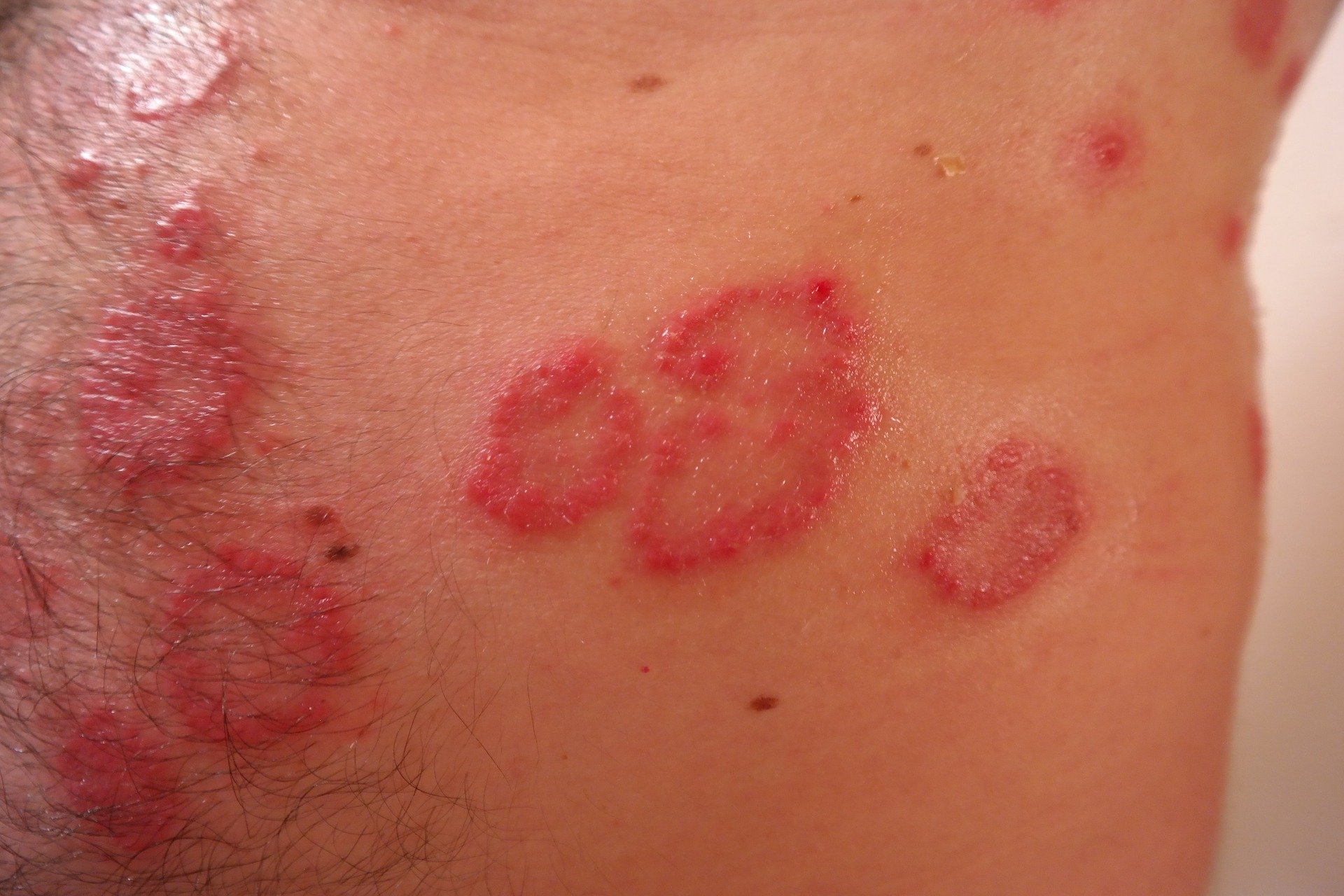
Psoriasis is a skin disease in which skin cells tend to multiply with faster rates such as up to 10 times faster than normal. In psoriasis, the skin is built up as red bumpy patches covered with white scales. It can happen anywhere on the skin but mostly appear on the lower back, scalp, knees, and elbows.
Psoriasis is a common skin condition that appears in early adulthood. Sometimes it can be localized and affects only a limited area of the skin. However, in some cases, it can affect a larger area of the body1.
Psoriasis is a chronic condition that has no cure. It is a recurrent disorder that may go through cycles. Only symptomatic treatment is available to manage your symptoms. Lifestyle changes can also help to manage this condition and you can live better with psoriasis2.
Symptoms of Psoriasis
The symptoms of psoriasis depend on the type and may also differ from person to person. Psoriasis may cover the majority area of the body or just small flakes on the elbow or scalp. The psoriasis area may also vary in size, it may be as small as a few flakes on the elbow, scalp, or cover the majority of the body area.
The common symptoms are
- Raises, inflamed and red skin patches
- Thick, pitted nails
- Burning and itching sensations around patches
- Swollen and painful joints
- White scales on red patches
- Crack and red skin that may bleed
- Patches covered with soreness
- Burning and itching around patches
The symptoms of psoriasis in some people are less common, the chances are there that they have less common symptoms. There are different cycles of symptoms of psoriasis.
Symptoms may come and go. You will have various symptoms at one point and that may resolve after a couple of days, but symptoms will also reappear due to the trigger of psoriasis. Symptoms of psoriasis sometimes completely go away3.
Types of psoriasis
The following are the five types of psoriasis:
Plaque psoriasis
The common form of psoriasis is plaque psoriasis. The cases of plaque psoriasis are 80% more than that of other types. The patches of plaque psoriasis are inflamed and red that covers your skin. These patches are covered with plaques or whitish-silver scales. Plaque psoriasis commonly found on scalp, knees, and elbows.
Guttate psoriasis
It mostly occurs in childhood. It is characterized by small pink spots. It is mostly found on the sites including legs, torso, and arms. The spots of guttate psoriasis are just like plaque psoriasis and are raised or thick. It is mostly aggravated by respiratory infections including tonsillitis and strep throat4.
Pustular psoriasis
Most adults suffer from pustular psoriasis. It is characterized by inflamed, red skin with pus-filled blisters. In many cases, it is confined to local areas and rarely widespread.
Inverse psoriasis
Inverse psoriasis mostly appears on genitals, breasts, groin, and around skin folds. It causes shiny, red, and inflamed skin.
Erythrodermic psoriasis
Erythrodermic psoriasis is a rare type. It can be severe sometimes. In erythrodermic psoriasis, skin looks completely sunburned. It is suggested to consult your doctor immediately because this condition can be life-threatening. Because it requires immediate treatment.
What are the causes of psoriasis?
The normal replacement time of skin cells is 10 to 30 days, but with psoriasis new cells grow every 3 to 4 days. It may run families but may skip generations as well. The following are some factors that may trigger an outbreak of psoriasis
- Certain medications like Hydroxychloroquine and beta-blockers and drugs used in bipolar disorders
- Stress
- Smoking
- Alcohol consumption
- Vitamin D deficiency
- Surgery or cuts
- Strep infections5
There is no known cause of psoriasis. However, research gives a general idea that the immune system and genetics may play some part in this condition.
Immune system
Psoriasis is an autoimmune disease in which the body attacks itself mistakenly. In psoriasis, T cells attack the skin cells. Usually, the function of T cells is to attack the foreign particles including viruses, bacteria, and fungi. The attack of T cells speeds up the production rate of the cells, and they start piling up.
Genetics
Genetics or family history is another cause of psoriasis. The risk of developing psoriasis is high if you have an immediate family member with psoriasis6.
Treatment options for psoriasis
There is no cure for psoriasis. Treatment aims to remove plaques, restrict the growth of skin cells, reduce scale and inflammation. There are three categories of the treatment, for psoriasis. Psoriasis treatment first reduces the inflammation and then clears the skin. The following are the approaches to the treatment and manage psoriasis.
Topical treatments
Use of creams and ointments on the skin for reducing psoriasis. This treatment is opted based on the extent, location, and severity. The following are topical psoriasis treatments include:
- Anthralin
- Topical corticosteroids
- Topical retinoids
- Moisturizers
- A calcineurin inhibitor
- Vitamin D analogs
- Salicylic acid
Systemic medications
In severe cases of psoriasis, when topical therapy is not effective, patients need systemic treatment in the form of oral and injectable medicines. These medicines must be used with caution as they have severe side effects.
The following are systemic medications for psoriasis.
- Biologics
- Methotrexate
- Cyclosporine
- Retinoids
- Azathioprine
Phototherapy
It is a technique that is carried out with the help of ultraviolet traditions and in a combination of systemic and topical agents.
The following are the light sources used including:
- Sunlight
- Excimer laser
- Narrowband UVB
- Broadband UVB
- Photochemotherapy or Psoralen plus ultraviolet A (PUVA)
- Targeted phototherapy
- Goeckerman therapy
- Narrowband UVB phototherapy7
Complications of psoriasis
Psoriasis is a stimulating disorder that can be tough to manage. Uncontrolled psoriasis can cause many complications including
- Celiac disease
- Hypertension
- Cancer
- Mouth problems
- Diabetes (Type 2)
- Kidney disorders
- anxiety and depression
- Eye problems
- Obesity
- Parkinson’s disease8
References
- Psoriasis. [internet]. 2019 June 25 [cited 2020 July 17]; Available from https://www.webmd.com/skin-problems-and-treatments/psoriasis/understanding-psoriasis-basics
- Psoriasis. [internet]. [cited 2020 July 17]; Available from https://www.mayoclinic.org/diseases-conditions/psoriasis/symptoms-causes/syc-20355840
- Everything you need to know about psoriasis. [internet]. 2020 June 30 [cited 2020 July 17]; Available from https://www.healthline.com/health/psoriasis#symptoms-of-psoriasis
- Psoriasis. [internet]. 2019 June 25 [cited 2020 July 17]; Available from https://www.webmd.com/skin-problems-and-treatments/psoriasis/understanding-psoriasis-basics
- Everything you need to know about psoriasis. [internet]. 2020 June 30 [cited 2020 July 17]; Available from https://www.healthline.com/health/psoriasis#symptoms-of-psoriasis
- Psoriasis. [internet]. 2014 August 1 [cited 2020 July 17]; Available from https://dermnetnz.org/topics/psoriasis/
- What you know about psoriasis. [internet]. 2019 July 5 [cited 2020 July 17]; Available from https://www.medicalnewstoday.com/articles/52457#complications
-
Psoriasis. [internet]. 2014 August 1 [cited 2020 July 17]; Available from https://dermnetnz.org/topics/psoriasis/
Find articles related to: Medicine Telehealth Health psoriasis skin diseases rash types of psoriais
More articles about Skin & Esthetics
Back to the Health Tips Index