Infections - Prevention, Diagnosis & Treatment
Can the COVID-19 virus be spread through food, water, surfaces and pets?
By A.S. (staff writer) , published on July 09, 2020
Medicine Telehealth COVID-19 and Food COVID and Pets


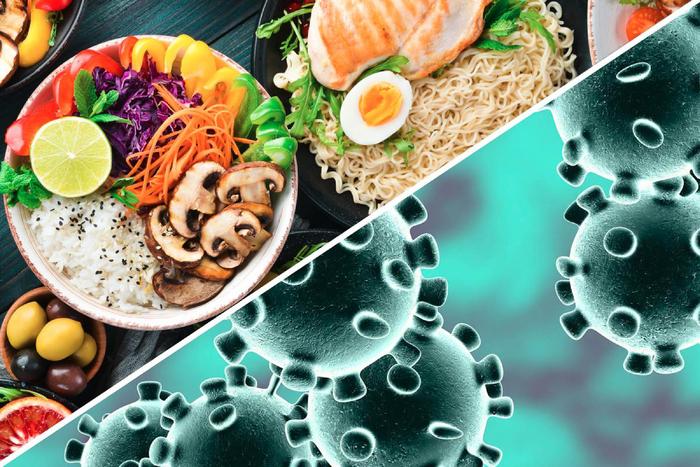
It is possible that a person can get COVID-19 by touching a surface or object, including food or food packaging, that has the virus on it and then touching their own mouth, nose, or possibly their eyes. However, this is not thought to be the main way the virus spreads. Currently, there is no evidence to suggest that handling food or consuming food is associated with COVID-19.
It’s important after shopping, handling food packages, before preparing or eating food it is important to always wash your hands with soap and water for 20 seconds for general food safety. Throughout the day wash your hands after blowing your nose, coughing or sneezing, or going to the bathroom. If there is no availability of water or soap, use sanitizer containing 60 % alcohol.
The risk of getting COVID-19 from food or food packaging is very low
-
A virus requires a living host to replicate or multiply by itself. COVID-19 uses the bio-synthetic machinery of living host to replicate itself.
-
The virus that causes COVID-19 cannot grow on food. Although bacteria can grow on food, a virus requires a living host like a person or an animal to multiply.
-
Currently, there is no evidence that the virus that causes COVID-19 spreads to people through food. However, it is important to safely handle and continue to cook foods to their recommended cooking temperature to prevent foodborne illness.
-
Although some people who work in food production and processing facilities have gotten COVID-19, there is no evidence of the virus spreading to consumers through the food or packaging that workers in these facilities may have handled.
Still, if you're concerned, it's reasonable to follow general food safety guidelines. Wash your hands for at least 20 seconds with soap and water after handling takeout containers, and then transfer food to a clean dish using clean utensils.
The best practice is to follow food safety guidelines and wash all fruits and vegetables thoroughly before eating them, by running them under running water. Soap isn't needed.
Clean and disinfect any reusable bags that you carried to and from the store. Most cloth bags can go through the washer and dryer; other bags can be cleaned using a disinfectant wipe or spray.
Drinking water
The virus that causes COVID-19 has not been found in drinking water. The Environmental Protection Agency regulates water treatment plants to ensure that treated water is safe to drink.
Household surfaces
Regularly clean and disinfect kitchen counters using a commercially available disinfectant product. Before preparing food on the kitchen counter, rinse the disinfected surfaces with water. WARNING: Do not use this solution or other disinfecting products on food or food packaging.
COVID-19 and Animals
Coronaviruses are a large family of viruses. Some coronaviruses cause cold-like illnesses in people, while others cause illness in certain types of animals, such as cattle, camels, and bats. Some coronaviruses, such as Zika, canine and feline coronaviruses, infect only animals and do not infect humans.
At this time, there is no evidence that animals play a significant role in spreading the virus that causes COVID-19. Based on the limited information available to date, the risk of animals spreading COVID-19 to people is considered relatively low. More studies are needed to evaluate do animals significantly involve in spreading COVID-19.
References
Spread of COVID-19 through food or water? (2020, June 2). Retrieved from CDC Guidelines: https://www.cdc.gov/coronavirus/2019-ncov/daily-life-coping/food-and-COVID-19.html
William F. Marshall, I. M. (2020, May 26). Can COVID-19 (coronavirus) spread through food, water, surfaces, and pets? Retrieved from MAYO CLINICS: https://www.mayoclinic.org/diseases-conditions/coronavirus/expert-answers/can-coronavirus-spread-food-water/faq-20485479
Find articles related to: Medicine Telehealth COVID-19 and Food COVID and Pets
More articles about Infections - Prevention, Diagnosis & Treatment
Back to the Health Tips Index